The Past

“Bringing back the past” ...
Is one of those phrases that can mean a dozen different things depending on where your heart is pointed. It can be nostalgia, longing, frustration with the present, or even a desire to reclaim values that feel lost - good tejano music.
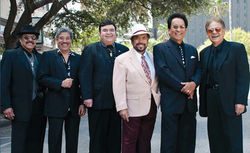
In Tejano music’s glory days, it could feel as if there was no limit to where the music and its stars might go. In fact, that golden age was defined by stars such as Little Joe y La Familia, Grupo Mazz, La Mafia, Patsy Torres, Laura Canales, and Emilio Navaira.
Tejano music - sometimes called Tejano Onda or La Onda in the early days - was a mix of pop, country and Tex-Mex music. It was characterized by synthesizers in place of the accordion of conjuntos or the horns of an orquesta.
 |  |  |
|---|---|---|
 |  |  |
 |  |  |
 |  |  |
 |  |  |
 |  |  |
 |  |  |
 |  |  |
I actually think, [or it seems to me], that other generations, cultures, and these fans/people only listen to 1 or 2 types of music, but us tejanos we're different! ... we listen to everything!, and that's what makes us so different, so special, unique, and great! ... we like all kinds of music! ... from classical, tejano to oldies to R&B, Latin salsa, new and old country, and even the 70s, 80s, and 90s hits. Yep, and that is super about us! GO TEJANOS!
Even as musicians back when. in 'live' performances we had to play boleros, rancheras, oldies, cumbias, a few rock tunes also, and sing in both English and Spanish. In my dad's orchestra, he used play danzones, valses [waltzes], polkas, rumbas, mambos, and one microphone only!
Tejano Music Pioneers ... The Past & Present


A few San Jose CA groups - 80s, 90s


Biographies
Pioneering bassist Pete Ramos Garza became a legend while playing with the Latin Breed during the Chicano Movement of the 1970s. Adding jazz, funk, and soul to Hispanic music, they birthed something new.
“They were influenced by groups like Chicago, Tower of Power, and Earth Wind and fire. If it weren’t for those two guys, we wouldn’t have been able to use the horns as we did. He (Garza) laid down a beautiful groove for us to play on.” Garza died from cancer complications Sept. 16. He was 67. Garza entered the Chicano music scene at the age of 15 when his brother Joe gave him his first guitar.
In 1963, while going to Fox Tech High School, he joined local garage band Danny and the Dreamers. After graduation, in 1969, Garza and a few members of the group started the Latin Breed. “They were like the Beatles of the Hispanic nation,” his son said. The group lasted for a year, disbanded, and then started up again in 1973. During the in-between years, Garza joined Sunny and the Sunliners band. “I met Peter in 1971,” Escobedo said. “Sonny needed a sax player and asked if I would play with the band.” It started a 40-year friendship. “Pete was like a brother to me,” Escobedo said. “He loved his family, God and music.”
When the Latin Breed started back up, Escobedo joined them. The Latin Corner, a club that used to be on 1581 Bandera Road, became the band’s home base. “We rehearsed at the club two days a week and played there four; we did a lot of functions back then,” Escobedo said. In 2003, Garza was inducted into the Tejano Music Hall of Fame. In 2010, he received the Bass Player of the Year Award at the Tejano Music Awards. However, fame came second to family, his son said. “He would bend over backward to show us how much he loved us.”
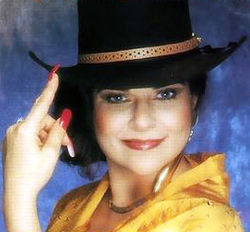
Raised in Texas, Laura Canales was a always strong vocalist throughout her youth. And just like Selena, Canales’ father played a pivotal role in the early days of her career when he encouraged her to perform Tejano music, the hybrid style created along the Texas-Mexico border that was primarily sung by men at the time. Canales first appeared on the scene in 1973, performing with the groups Los Unicos and Conjunto Bernal. Then in the 1970s, she helped form the band Snowball & Company, which went on to release several albums and had a hit with the song “Midnight Blue.”
But it was in the next decade that Canales truly found fame. In 1981, she and her new husband formed Laura Canales & Encanto. The band released several records throughout the decade and had a major hit with the track “Sí Viví Contigo.” Soon she was dubbed “La Reina de la Onda Tejana” (“The Queen of the Tejano Wave”) and took home the Female Vocalist of the Year at the Tejano Music Awards from 1983 to 1985. Selena broke that streak when she won the award in 1986.
It is unclear if anything like the inspirational conversation between the two singers as depicted in “Selena: The Series” actually took place at the 1986 awards. However, we do know that the two stars did maintain a friendly relationship as their careers coincided - even as they were competing for the same awards and Selena was bringing the Tejano sound to fresh audiences and massive stadiums.
Selena and Canales did also perform together at multiple events throughout their careers, and Canales was able to ride the wave of international interest in Tejano music in the 1990s during her first comeback, performing hits like “Cuatro Caminos” and “Dame La Mano.” After Selena’s tragic murder in 1995, Canales paid her respect to the young singer by attending her burial at Seaside Memorial Park in Corpus Christi, Texas.
In the 1990s, Canales decided to start her second act and enrolled at Texas A&M University-Kingsville, and in 1997 she graduated with a BA in Psychology and Speech Therapy. But that was not the end of her music career - she mounted a second comeback when she appeared on the Leyendas y Raices tour, which featured fellow Tejano performers.
In 2000, Canales had the honor of being a member of the first class of inductees into the Tejano Roots Hall of Fame. Sadly, her life was cut short when she developed a case of pneumonia and died suddenly on April 16, 2005, after complications from gallbladder surgery, NPR reported. She was 50 years old.
Celebrated musician Armando Manzanero has died at the age of 85. The news of his passing was confirmed by the Sociedad de Autores y Compositores de Mexico (Society of Authors and Composers of Mexico), which Manzanero served as the president of. "The romantic soul of Mexico and the world is in mourning. The great Master has departed," the organization said in a tweeted statement, per Google Translate.
The message continued, noting the musician's contributions to copyright. "His departure provoked a deep sadness," the group continued. "He was one of the greatest artists of our time, creator of the 'most beautiful music in the world'." The organization promised that the singer's memory "will live in the souls of all of us who learned to love with his songs" and that "his musical work will be heard forever." The statement concluded: "See you soon, dear brother!" The message came alongside a sweet photo of Manzanero holding his hand to his heart.
According to Billboard, multiple outlets have reported that the musician's cause of death was coronavirus.
El Universal reports that Manzanero was diagnosed with COVID-19 on Dec. 17, just five days before being intubated. He was reportedly expected to be extubated until his case took a turn for the worse. Aside from his own illustrious career, the musician penned songs for the likes of Frank Sinatra, Elvis Presley, Andrea Bocelli and more. The star received a Grammy nomination in 1971 for song of the year for the hit "It's Impossible." Decades later, he received a lifetime achievement award from the organization, as he did from the Latin Recording Academy. In 2001, he won a Latin Grammy for his album "Duetos."
The international recognition also prompted a response from the Latin Recording Academy on Twitter.
"Armando Manzanero, recipient of the Award for Musical Excellence and winner of the Latin GRAMMY, as well as a great friend of the Academy is gone," the organization said, per Twitter's translation. "We celebrate his life and work. [An] Irreparable loss for the world of Latin music. We accompany the Manzanero family in their deep pain." Per Billboard, Manzanero was born in Mérida, Yucatán in 1935 and began studying music at just eight years old. He would become known for the songs "Contigo Aprendí," "Adoro" and "Esta Tarde Vi Llover."
Representatives for the star could not be reached.